Many thousands more to follow.
Wednesday, June 6, 2012
First Tesla Model S Delivered
First Tesla Model S all electric sedan delivered to the first customer, 2 weeks ahead of schedule. What's not to like?
Many thousands more to follow.
Many thousands more to follow.

Tuesday, May 1, 2012
Are EV's Victims Of Their Own Potential?
EV sales have been somewhat lower than expected and many are claiming this to be proof that the concept is flawed and the technology cannot work. In truth this may simply be the result of the expected and likely future improvements that are going to take place, and that we have come to expect from modern technology. Most people don't buy the first iteration of any new technology, be it computer, cell phone, flat panel TV, iPod, or iPad. They know that waiting a few months to a few years will bring better and cheaper products, which is equally true for EV's. There are always early adopters who must have the latest and greatest, and they pay a premium to do so. Since a car is a larger investment than a cell phone or a flat panel display the population of early adopters is of course going to be smaller. The difference that is often ignored is that early adoption of an EV can actually provide reduced operating costs during it's use, putting it's overall costs more inline with cheaper ICE vehicles. Also overlooked is the ability to upgrade an older EV with a newer, better pack in the future, giving better than new performance. Regardless, people know they will get better and cheaper with time, battery improvements and breakthroughs are not only expected but seem to be announced every few months, even though it will take time for them to make it into production. The car companies themselves talk about future improvements to their vehicles, with longer range and lower prices, but by doing so they probably hurt potential sales in the present.
I'm not sure there is a solution to this problem other than time. At some point, as with all new technologies, the entry price point will be low enough and the perceived value high enough that people will start to adopt it in large volumes. In the mean time those of use who paid the higher prices, or put in the time to build our own, get to take advantage of the lower operating costs and get to enjoy the smooth, quiet driving experience, as well as the visceral pleasure of driving past gas stations and not caring about the price per gallon.

Why is this man smiling? The answer is on his shirt.
I'm not sure there is a solution to this problem other than time. At some point, as with all new technologies, the entry price point will be low enough and the perceived value high enough that people will start to adopt it in large volumes. In the mean time those of use who paid the higher prices, or put in the time to build our own, get to take advantage of the lower operating costs and get to enjoy the smooth, quiet driving experience, as well as the visceral pleasure of driving past gas stations and not caring about the price per gallon.
Why is this man smiling? The answer is on his shirt.
Saturday, April 14, 2012
More Problems For Better Place
More bad news for Better Place, losing money as well as failing to deliver as promised.
http://www.globes.co.il/serveen/globes/docview.asp?did=1000740448
http://www.greenprophet.com/2012/04/better-place-loses-millions/
Oops, who could have guessed? Oh wait, me! :)
Shay Agassi's electric car venture Better Place LLC is facing delays in the deployment of its battery recharging and quick replacement infrastructure in Denmark as well as in Israel.
Renault SA (Euronext: RNO), which directly markets its electric car in Denmark, has announced that it will launch the Zoe compact electric car in October. It considers the Zoe more suited to the Danish market than the electric version of the Fluence sedan, which is not popular in the country. Renault also announced that, until further notice, it will market the Zoe only with a permanent battery, rather than the replaceable battery "until Better Place proves that its organization and battery replacement system are functioning properly."
http://www.globes.co.il/serveen/globes/docview.asp?did=1000740448
Better Place was expected to sell 115,000 electric cars in Denmark and Israel between 2011 and 2016, but the company is far behind those numbers.
http://www.greenprophet.com/2012/04/better-place-loses-millions/
Oops, who could have guessed? Oh wait, me! :)
Saturday, March 24, 2012
Where GM Went Wrong With The Volt
From most accounts of those who own one GM built a really nice vehicle in the Chevy Volt. Customer satisfaction is very high, though you'd never know it from all the negative press surrounding the vehicle. Most of the problems that are causing poor sales of the Volt have to do with the GM marketing department, not the engineering and production departments. GM tried to sell their plug in hybrid as if it was an EV, while at the same time pushing range anxiety and "more car than electric", which backfired when people thought the Volt was a 40 mile "EV" that cost $40K. GM also made a mistake by marketing it as a Chevy product. What they should have done is market it as a Cadillac, an upscale plug in hybrid, throw in a few extra luxury bits, and charged an extra $5-$9K for it. In short they should have made the "Volt" the "Converj" right from the beginning.
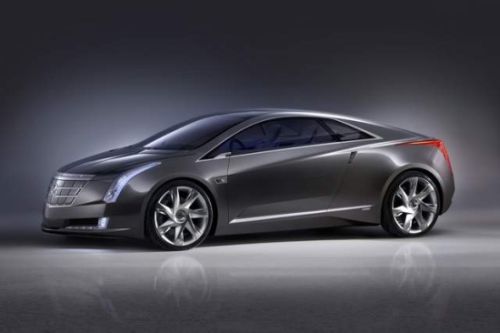 Cadillac Converj
The Cadillac brand could have handled the price premium better, and the styling is a little more aggressive and exciting. By not pretending to be an EV much confusion could have been avoided, along with much negativity. People would be less inclined to criticize a $45K+ vehicle from Cadillac than a $40K vehicle from Chevy.
Of course what they really should have done was build the real EV that Bob Lutz initially wanted to in the first place, but once that idea was scrapped they should have positioned it as an upscale luxury hybrid and badged it as a Cadillac. Next time GM, check with me, you could have avoided this whole mess.
The Cadillac brand could have handled the price premium better, and the styling is a little more aggressive and exciting. By not pretending to be an EV much confusion could have been avoided, along with much negativity. People would be less inclined to criticize a $45K+ vehicle from Cadillac than a $40K vehicle from Chevy.
Of course what they really should have done was build the real EV that Bob Lutz initially wanted to in the first place, but once that idea was scrapped they should have positioned it as an upscale luxury hybrid and badged it as a Cadillac. Next time GM, check with me, you could have avoided this whole mess.
Sunday, February 26, 2012
The Karma Is Not An EV

He's not driving an EV either.
In a previous post I explained why the Volt is not an EV. For all the same reasons neither is the Fisker Karma. It's a plug in series hybrid. It has enough battery to provide about 50 miles of electric range, then the on board generator kicks in, providing electrical power to the motor, but unlike the Volt, the gas motor never drives the wheels directly. It's a less complex setup, which is good, but in this particular design it creates a less efficient vehicle, which is bad. The Karma is heavy and not particularly efficient when running from the generator. Considering it's price tag it also does not have exceptional performance specs, the Tesla Model S is cheaper, faster, more efficient, and an actual EV.
The Karma is a beautiful car, unfortunately it's not all that exceptional beyond that, and it is not an EV. Maybe at some point they can pull out the gas motor, add enough batteries to improve the performance and range, and create a real EV.
Sunday, December 18, 2011
Weak Anti-EV Arguments Collapse Under The Weight Of Reality
The anti-EV crowd has been working overtime trying to come up with different ways to discredit EV technology and slow it's inevitable adoption as an efficient choice for transportation. It's somewhat amusing to watch them twist themselves into pretzels and various other uncomfortable shapes as they attempt to spin every possible scrap of information into a thread of support for their untenable position. People who obviously don't care about CO2 emissions constantly squawk about coal power, people who previously claimed that hybrids such as the Prius were nothing but green washing now tout them as a better solution to our oil usage than EV's, people who pretend to be patriots ignore the benefits of using domestically produced electricity over foreign oil, and people who think we should use natural gas fail to comprehend that it's better to use this limited fossil fuel resource in large generating plants to charge EV's instead of wastefully burning it in inefficient individual ICE vehicles. They look at the state of current technology, including battery chemistry and power generation, and assume it will not and cannot improve, even though it has been and will continue to do so. They talk about limited resources as if that only applies to EV's and not other forms of transportation as well. They imagine EV's putting additional load on the grid while ignoring vehicle to grid technology that would allow a fleet of plugged in EV's to actually help support the grid when needed, including storage of excess solar and wind power.
It's a worthwhile exercise to question the effects of widespread EV adoption but it must be done with an open mind willing to consider all aspects, not simply limited to one's personal preconceptions and existing conditions. Today's EV's can take advantage of tomorrow's cleaner and smarter grid as well as the growing volume of home generated wind and solar power.
EV's have the potential to deliver on an unrealized promise of personal transportation by allowing us not only to go where we wish but also to control the energy we use from power we create ourselves, free from the monolithic fueling infrastructure controlled by oil companies and OPEC.
It's a worthwhile exercise to question the effects of widespread EV adoption but it must be done with an open mind willing to consider all aspects, not simply limited to one's personal preconceptions and existing conditions. Today's EV's can take advantage of tomorrow's cleaner and smarter grid as well as the growing volume of home generated wind and solar power.
EV's have the potential to deliver on an unrealized promise of personal transportation by allowing us not only to go where we wish but also to control the energy we use from power we create ourselves, free from the monolithic fueling infrastructure controlled by oil companies and OPEC.
Thursday, December 8, 2011
The Volt Battery Issue, Much Ado About Nothing
The media and the anti EV crowd have been getting quite worked up lately about the Chevy Volt battery pack and perceived yet unrealized dangers from fire. Two Chevy Volts were parked in garages that happened to burn down, just as happens to many ICE vehicles every year, yet in the Volt cases blame was automatically placed on the hybrid vehicles, presumably because they are something new. However in both cases the Volts and their batteries were found not to be the source of fires.
Then in May NHTSA ran a side impact test on a Chevy Volt. This test consists of sliding a vehicle sideways into a solidly mounted pole which totals the vehicle. The Volt passed the test for occupant safety.
Three weeks after the test, which damaged the battery pack, the pack caught fire. (Interestingly when the same test is done on conventional ICE vehicles the tank is drained, probably because NHTSA doesn't want gasoline flying all over it's facilities.) This seemed to be an isolated incident as other tests done by other organizations did not result in any fires. To further investigate NHTSA ran more tests on Volt battery packs, bare packs not in a vehicle. The packs were penetrated, further than in the original crash test, then rotated to simulate a rollover. In the first test nothing happened. In a second test there was a temporary temperature increase initially, then a week later this pack caught fire. In a third test the pack smoked and sparked but did not catch fire. At this point it seems that leaking coolant for the batteries can cause some short circuiting if the pack is not drained after a severe accident. There have been no fires in actual use during a crash of the Volt, and NHTSA considers the Volt to be a safe car which has a 5 star crash rating. GM is working on some upgrades which will further protect the pack and address this battery issue which would only happen in extremely rare circumstances.
There are over 200,000 vehicle fires a year in the US, all of them ICE vehicles, yet because the Volt is a new product people are trying to paint it as more dangerous than it really is. Any vehicle has risks, any energy storage container, be it battery or fuel tank, has the potential for mayhem, and nothing can be made completely safe. However, in the real world, the Volt has proven to be safer than most other vehicles on the road, and with the planned upgrades it should be safer still. I'd be much more concerned with the Volt's gas tank in a crash than it's battery pack. The LEAF, an EV with a larger, but air cooled battery pack, has had no issues in any crash test or real world accidents. Nor have any of the crashed Tesla Roadsters, with even larger yet liquid cooled packs. At this point EV's are proving to be statistically safer than ICE vehicles, as I would expect, and that trend is likely to continue.
Related:
NHTSA
Coolant cause of shorts
Battery Upgrades
Vehicle Fires
Then in May NHTSA ran a side impact test on a Chevy Volt. This test consists of sliding a vehicle sideways into a solidly mounted pole which totals the vehicle. The Volt passed the test for occupant safety.
Three weeks after the test, which damaged the battery pack, the pack caught fire. (Interestingly when the same test is done on conventional ICE vehicles the tank is drained, probably because NHTSA doesn't want gasoline flying all over it's facilities.) This seemed to be an isolated incident as other tests done by other organizations did not result in any fires. To further investigate NHTSA ran more tests on Volt battery packs, bare packs not in a vehicle. The packs were penetrated, further than in the original crash test, then rotated to simulate a rollover. In the first test nothing happened. In a second test there was a temporary temperature increase initially, then a week later this pack caught fire. In a third test the pack smoked and sparked but did not catch fire. At this point it seems that leaking coolant for the batteries can cause some short circuiting if the pack is not drained after a severe accident. There have been no fires in actual use during a crash of the Volt, and NHTSA considers the Volt to be a safe car which has a 5 star crash rating. GM is working on some upgrades which will further protect the pack and address this battery issue which would only happen in extremely rare circumstances.
There are over 200,000 vehicle fires a year in the US, all of them ICE vehicles, yet because the Volt is a new product people are trying to paint it as more dangerous than it really is. Any vehicle has risks, any energy storage container, be it battery or fuel tank, has the potential for mayhem, and nothing can be made completely safe. However, in the real world, the Volt has proven to be safer than most other vehicles on the road, and with the planned upgrades it should be safer still. I'd be much more concerned with the Volt's gas tank in a crash than it's battery pack. The LEAF, an EV with a larger, but air cooled battery pack, has had no issues in any crash test or real world accidents. Nor have any of the crashed Tesla Roadsters, with even larger yet liquid cooled packs. At this point EV's are proving to be statistically safer than ICE vehicles, as I would expect, and that trend is likely to continue.
Related:
NHTSA
Coolant cause of shorts
Battery Upgrades
Vehicle Fires
Saturday, November 26, 2011
Moore's Law For Batteries, Don't Count On It
Some people have expressed an opinion that we will see a Moore's law for batteries. I think this is unlikely for two basic reasons: We've seen no such thing to date and batteries are not computer chips. Moore's law states that the density of transistors which can be put on an integrated circuit will double every 18 months, and so far it has held true. This has led to faster computer power and lower costs for electronics. What we've seen in lithium battery advances has mostly been steady advances of 5% a year with occasional jumps. I do expect we'll see more dramatic advances in the future as the sheer volume of research on the topic is increasing and none of the current chemistries are near their limits, to say nothing of future chemistries. Battery development is akin to squeezing a balloon, one end gets smaller while the other end bulges larger. Batteries have four parameters that need to be optimized, energy density, power delivery, useable life, (cycle and calendar), and safety. In batteries when you optimize for energy density you tend to decrease longevity, if you optimize for power you lessen energy density, and so on. The key is of course getting all these into one package, and ultimately at an affordable price, which really adds a fifth parameter just as important as the other four. It doesn't matter how good a battery is if it can't be produced at a reasonable cost. Unlike computer chips most of the costs of batteries are the high purity materials that must go into them. Advances come by using those materials in better ways, by finding better materials, and by improving the construction process. This mostly comes from constant research, trial and error, and tweaking and optimizing assembly lines to improve production yields.
A lot of work is being done in the field and there are very promising developments being announced on a regular basis but none as of yet has made it to market in an affordable product. I expect at some point some of them will and we will see a major jump in all battery parameters, but don't expect a steady doubling of all parameters every 18 months. Of course I'd be quite happy to be proven wrong in this case.
A lot of work is being done in the field and there are very promising developments being announced on a regular basis but none as of yet has made it to market in an affordable product. I expect at some point some of them will and we will see a major jump in all battery parameters, but don't expect a steady doubling of all parameters every 18 months. Of course I'd be quite happy to be proven wrong in this case.
Sunday, November 6, 2011
Is It Time To Restructure EV Subsidies?
Obviously I'm a strong proponent of electric vehicles and I think subsides for their development are necessary and money well spent. However that doesn't mean we can't improve the way that money is distributed. Specifically addressing the vehicle purchase rebate I don't think we need to subsidize vehicles such as the Fisker Karma, a $90,000 plug in hybrid vehicle with poor efficiency. Frankly I'm not even convinced we should continue to offer purchase incentives for vehicles over the $50,000 dollar mark, which would include the Tesla Model S. It's an awesome vehicle that needs no support other than what it is and it's target purchasers really don't need the financial incentives. I think it can stand on it's own, and the money can be better spent on building out the charging infrastructure and driving the development of lower priced EV's. We should reward efficiency by tying incentives to some relationship between vehicle watt hour per mile energy use as well as it's overall cost. This would push manufacturers to get more mileage out of smaller battery packs by using better aerodynamics and lighter weight materials. While the LEAF is a good EV it's drag coefficient is too high, as is it's weight, and consequently it's range suffers a bit. We need to rethink and redesign the automobile to get the most out of our battery packs, the single most expensive component. Jamming in a huge battery pack is fine for an upscale luxury vehicle such as the Tesla Model S that can absorb the cost but obviously mass market vehicles cannot do the same, nor is that a sustainable and efficient way forward.
With the current political and social climate pushing for reduced government spending and an increasing attack on "green" products it's hard to justify giving tax breaks to people who really don't need them. If EV's are seen as toys for the rich it's going to be difficult if not impossible to continue to get funding for battery research and charging infrastructure development.
With the current political and social climate pushing for reduced government spending and an increasing attack on "green" products it's hard to justify giving tax breaks to people who really don't need them. If EV's are seen as toys for the rich it's going to be difficult if not impossible to continue to get funding for battery research and charging infrastructure development.
Tuesday, October 18, 2011
Battery Electrolyte Breakdown Voltage
I don't usually get into technical discussions on this blog but I thought it might be worth while to continue the topic started on Jack Rickard's EVTV blog. Simply put Jack has stated that pushing the voltage of a LiFePO4 cell above 4.3 Volts, the breakdown voltage of the electrolyte, will not harm a cell if the cell is not full, and that in fact there is no such thing as electrolyte breakdown voltage. This of course flies in the face of just about everything I've read on the topic, and even contradicts what battery researcher Jay Whitacre states in his LiFePO4 battery lecture video, a video that Jack actually provided a link to.
Go to the 50 minute mark in Jay's video and listen as he talks about electrolyte solvent breakdown above 4.3 volts, equivalent to water electrolysis at 1.3 volts. If a cell voltage is held above the breakdown voltage of the electrolyte the components of the electrolyte begin to separate out. This can happen even if the cell is not yet full. In normal use this should not be an issue, but it is something to be aware of.
For further technical reading about electrolyte breakdown voltage there is this rather comprehensive review by Kang Xu: Nonaqueous Liquid Electrolytes for Lithium-Based Rechargeable Batteries
The pertinent information starts in section 5.2 page 4325
Go to the 50 minute mark in Jay's video and listen as he talks about electrolyte solvent breakdown above 4.3 volts, equivalent to water electrolysis at 1.3 volts. If a cell voltage is held above the breakdown voltage of the electrolyte the components of the electrolyte begin to separate out. This can happen even if the cell is not yet full. In normal use this should not be an issue, but it is something to be aware of.
For further technical reading about electrolyte breakdown voltage there is this rather comprehensive review by Kang Xu: Nonaqueous Liquid Electrolytes for Lithium-Based Rechargeable Batteries
The pertinent information starts in section 5.2 page 4325
Saturday, October 15, 2011
EV Subsidies, Why We Need them
Some people complain about the current subsidies that EV's are getting, a $7500 Federal tax credit and some other incentives depending on where you live. The argument is usually something similar to "Why should I help pay for someone's car, or to help promote a technology I don't agree with?" On it's surface that seems to be a fair point, until you consider the fact that our tax money is often used for things that some individuals may not necessarily agree with. The main reason EV's need subsidies is to compete on a level playing field with an established oil industry which still benefits from subsidies that artificially lower the cost of doing business and artificially lowers the cost we pay at the pump. A recent article exposes the issue:
Oil Subsidies Rise
I'm quite ready to end EV subsidies when the oil and gas industries do the same.
The IEA estimates that subsidies that artificially lower the cost of fossil fuels – and also impede development of renewables – hit $409 billion in 2010, an increase of nearly $110 billion over 2009 levels. The IEA says that the amount of total worldwide subsidies (assisting with production and consumption) on fossil fuels in 2010 will reach half a trillion dollars. What's even worse is that the IEA predicts that fossil fuel subsidies will soar to $660 billion in 2020.
Oil Subsidies Rise
I'm quite ready to end EV subsidies when the oil and gas industries do the same.
Sunday, July 10, 2011
The Truth About "Better Place"
More confirmation of what I've been saying about BP:
The contempt Better Place is demonstrating for the Israeli consumer will presumably greatly reduce the number of electric cars sold here, but it's not clear the company cares. Indeed, it's not inconceivable that the electric car is just a gimmick. The big money for Better Place lies in the monopoly it received from the state on building and operating charging stations.BP-Bigger Profits
This monopoly - which turns any car manufacturer that might ever bring an electric car to Israel, as well as its customers, into a captive audience - is worth pure gold.
Saturday, June 25, 2011
Ghosn on Project Better Place, Not for The US
Ghosn says exactly what I've been saying about BP:
Why does the head of the one large automaker who's actually working with BP make this claim? Because he says the swap stations are too expensive. Couple expensive swap stations with a small country such as Israel which can be entirely covered with a single recharge and it's pretty obvious BP isn't even necessary in Israel. I'd love to see some statistics as to how often the swap feature is even used in Israel when this actually goes into operation. As I've been saying for a long time, BP and swapping is completely unnecessary and likely to fail.
BP Fail
More Fail
"You could not imagine something like this in a country like Austrailia, Russia, or the US."
Why does the head of the one large automaker who's actually working with BP make this claim? Because he says the swap stations are too expensive. Couple expensive swap stations with a small country such as Israel which can be entirely covered with a single recharge and it's pretty obvious BP isn't even necessary in Israel. I'd love to see some statistics as to how often the swap feature is even used in Israel when this actually goes into operation. As I've been saying for a long time, BP and swapping is completely unnecessary and likely to fail.
BP Fail
More Fail
Sunday, June 19, 2011
One Billion Electric Vehicles

One of the arguments that the anti-EV crowd tries to use against EV's is that there simply is not enough material to build all the batteries needed for a significant number of EV's. I've never seen any credible numbers to back up that assertion, all estimates show plenty of lithium in the world, and I've never seen any projected restrictions on the various other materials used in battery construction. A new study has come out that shows we have enough raw material to build one billion 40kWh EV packs. That means we could replace every car on the road in the world today with an EV, almost twice over.
On the order of 1 billion 40 kWh Li-based EV batteries could be built with the currently estimated reserve base of lithium, according to a recent study by researchers from Lawrence Berkeley National laboratory and the University of California, Berkeley. Lifetime system cost, and other factors, will likely limit scale up more than resource constraints, they found.http://www.greencarcongress.com/2011/06/albertus-20110617.html
Worth noting that the LEAF pack is 24kWh so you could actually produce even more EV's like the LEAF, but I think one billion EV's should carry us for a while.
Sunday, June 5, 2011
The Volt Is Not An EV

It seems like such an obvious statement yet there remains a lot of confusion about this issue. Let me first state that I have nothing against the Volt, I think a plug in hybrid is a reasonable option for some people. I do have a problem with GM marketing trying to push a plug in hybrid as an electric vehicle, while at the same time taking shots at the perceived weakness of electric vehicles. It sends mixed messages and confuses the issue, even backfiring and hurting GM itself. I've seen a number of comments criticizing the Volt as an over priced EV that can only go 40 miles. Obviously they missed the point that it's actually a plug in hybrid that can go further when the gas motor turns on. GM has been trying to sell the Volt as a Range Extended Electric Vehicle, REEV, or an Extended Range Electric Vehicle, EREV, both terms that they made up. The Volt is simply a Plug in Hybrid Electric Vehicle, PHEV. This is to differentiate it from something like the Prius, a Hybrid Electric Vehicle, HEV, or simply hybrid. Hybrid and plug in hybrid simply and directly denote the differences between the two types. To dig further the Volt is a parallel/series hybrid, probably the most complex setup possible. A parallel hybrid means that both the electric motor and ICE can power the wheels directly, think Prius. A series hybrid has no connection between the ICE and the wheels, it's strictly an on board generator. The Volt uses clutches to allow various connections between the electric motor, ICE, and wheels, depending on conditions, hence the parallel/series designation.
This complexity is one of the reasons it's so important not to call the Volt an EV, since an EV has none of these complexities. An EV also does not have a gas tank, exhaust system, or an internal combustion engine. An EV will never need an oil change, or spark plugs, drive belts, O2 sensor, fuel pump, fuel filter, air filter, catalytic converter, muffler, fuel lines, etc.
Some Volt owners argue that they never use the gas motor and only drive on electricity, which is great, but doesn't make it an EV, and also doesn't make much sense. Why are you paying extra to haul around a gas tank and ICE that you don't need and that your goal is not to use? That's like driving around in a pickup truck every day and never using the bed, or driving an off road capable vehicle and never driving where you actually need four wheel drive.
From all accounts the Volt seems like well designed, innovative vehicle, and for potential EV drivers who still need training wheels or actually need to use the gas motor part of the time, it's a good choice. However, it is not and never will be an EV, it's a PHEV.
New data showing that the Volt is not an EV:
Electric vehicle means a vehicle that is powered by an electric motor drawing current from rechargeable storage batteries or other portable electrical energy storage devices, provided that:http://www.gpo.gov/fdsys/pkg/CFR-2011-title10-vol3/xml/CFR-2011-title10-vol3-part474.xml
(1) Recharge energy must be drawn from a source off the vehicle, such as residential electric service; and
(2) The vehicle must comply with all provisions of the Zero Emission Vehicle definition found in 40 CFR 88.104-94(g).
Tuesday, May 24, 2011
Long Distance EV Trip
A Tesla Roadster drives the entire length of England in 36 hours, (without the benefit of DC fast charging). 894 miles total, with 6 charge stops along the way, about $30 in electricity. More proof that battery swapping and Better Place are completely unnecessary.
Roadster trip

Roadster trip
Thursday, April 7, 2011
Game Changing Battery?
I've avoided commenting on specific battery technology because there are a number of promising technologies in development but nothing that appeared ready for prime time, until now. I've been watching DBM and their Kolibri battery for a few months and they seem to have something that may qualify as a breakthrough. They have been working on a variant of lithium polymer batteries and seem to have come up with viable solutions to some of the problems inherent in Li po cells. Li po cells have the ability to put out a lot of power from a small package, but they have typically had limited cycle life and a tendency to explode if not handled properly. DBM claims to have solved both problems as well as increased their energy density and achieved unheard of economics in cell construction. They did a well publicized test in Germany with the backing of the German government and Lekker Energie
If the cells are around 250 wh/kg or better and can be economically manufactured they would indeed be a game changer compared to what is currently in use.

Here is a video of independent abuse testing where the cells were vibrated, smashed, and heated with no catastrophic effects. Click on the "CC" icon on the right to get subtitles.
Another video www.ftd.de/unternehmen/:wirtschaft-auf-dem-weg-zum-elektroauto/60038567.html
Longer article http://gm-volt.com/2011/04/12/cost-effective-ev-battery-reportedly-passes-tests-recharges-in-minutes/
There is still not enough concrete information to know if this is a realistic breakthrough but as time goes on and evidence piles up it seems as if this may be an actual product with real world potential. It's worth keeping an eye on.
If the cells are around 250 wh/kg or better and can be economically manufactured they would indeed be a game changer compared to what is currently in use.

Here is a video of independent abuse testing where the cells were vibrated, smashed, and heated with no catastrophic effects. Click on the "CC" icon on the right to get subtitles.
Another video www.ftd.de/unternehmen/:wirtschaft-auf-dem-weg-zum-elektroauto/60038567.html
Longer article http://gm-volt.com/2011/04/12/cost-effective-ev-battery-reportedly-passes-tests-recharges-in-minutes/
There is still not enough concrete information to know if this is a realistic breakthrough but as time goes on and evidence piles up it seems as if this may be an actual product with real world potential. It's worth keeping an eye on.
Friday, March 25, 2011
Better Place Fairy Tale Crumbles
In an earlier post I pointed out many of the shortcomings of the BP business plan Better Place Exposed . Not surprisingly one of BP's largest early partners has just come to realize that the swap station concept makes no economic sense.
Of course by the time we see more cars on the road we'll already have many more charging stations available and improved battery technology will allow cars to go even further on a single charge. Who would have guessed?
the battery swapping system couldn’t possibly make good business sense yet, adding “[B]ut at £1million ($1.6 million) a piece we’re not going to see widespread stations yet. That is, until we see more cars on the road.”Swapping Too Expensive
Of course by the time we see more cars on the road we'll already have many more charging stations available and improved battery technology will allow cars to go even further on a single charge. Who would have guessed?
Thursday, March 24, 2011
The Future of Nuclear Power
A few days after my post on Thorium reactors the earthquake and tsunami disaster struck Japan, and then the ensuing nuclear problems. It's worth noting that the meltdown and radiation concerns surrounding the boiling water reactors at Fukushima would not exist with LFTR's. In the absence of power they shut down and passive cooling mechanisms keep things under control. In the end a 40 year old nuclear design came through a category 9 earthquake and a 20+ foot tsunami with relatively little widespread effects, though it could have been much worse. A modern LFTR would have done even better. I'm not sure what the future of nuclear power will be after the Japan incident but I'm not sure we have any real option other than to pursue some sort of nuclear power. More coal is certainly not viable, NG is a short term solution that still depends on fossil fuels, and without better storage I don't know if wind and solar can handle significant base load in the near future. More generating capacity will have to be built to feed a growing population unless we are prepared to severely cut back our power usage.
Sunday, March 6, 2011
Plugging In To Thorium
We need to take another look at nuclear power for our grid. I'm not talking about the conventional nuclear plants that produce waste lasting thousands of years, I'm talking about another technology which has been around almost as long but never really utilized, Liquid Fluoride Thorium Reactors, or LFTRS. LFTRS use Thorium, a waste material left over from mining operations that has to be disposed of. Since it's a waste product with no other use it would be an understatement to say the fuel costs would be low. We also have stockpiles of it buried in the desert in containers. After it's used in a LFTR there is minimal radioactive waste remaining and what there is decays in 100 years or so compared to the waste from a conventional reactor which must be contained for thousands of years. There are also some interesting and useful byproducts from these reactions, including medically useful isotopes and some rare earth metals, including neodymium. LFTRS can use the Brayton cycle turbine system which is smaller and more efficient than conventional steam turbines. Additionally LFTRS can't suffer from a China Syndrome meltdown scenario, they are self regulating. Since they are inherently safer they don't need large containment vessels and can be built much smaller.
So if they are cheaper, smaller, safer, and leave less waste, why aren't we using them? It's all about the bombs. LFTRS don't produce good material for nuclear bombs. Since we now have plenty of material for enough bombs to pretty much destroy the world it might be time to look at a safer, cheaper, more efficient technology to power our grid, and our EV's.
A very good video over view of LFTRS can be found here:
4 minute overview:
More in depth 25 minute overview:
Great source of info here: http://energyfromthorium.com
So if they are cheaper, smaller, safer, and leave less waste, why aren't we using them? It's all about the bombs. LFTRS don't produce good material for nuclear bombs. Since we now have plenty of material for enough bombs to pretty much destroy the world it might be time to look at a safer, cheaper, more efficient technology to power our grid, and our EV's.
A very good video over view of LFTRS can be found here:
4 minute overview:
More in depth 25 minute overview:
Great source of info here: http://energyfromthorium.com
Subscribe to:
Posts (Atom)